
BEST BEAUTY TECH OF CES
So I just spent three days at CES 2026, and I need to talk about the beauty tech section because something has fundamentally shifted. This isn't about cute gadgets anymore — we're seeing actual innovation that solves real problems. And I tested a lot of it.
Let me walk you through what's actually worth paying attention to, starting with the brands that clearly did their homework.
L'ORÉAL
LED MASKS
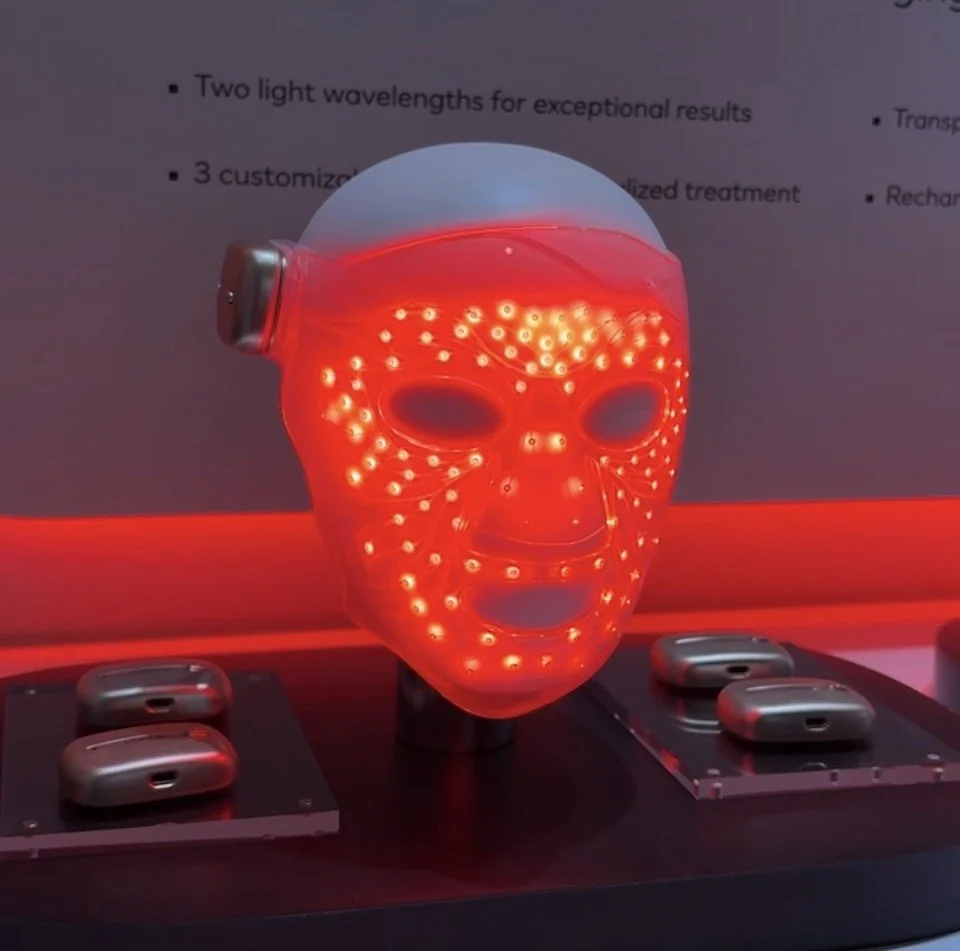
L'Oréal had one of the most impressive booths, and their LED mask technology is a perfect example of iteration done right.
If you've tried LED masks before, you know the main issue: they don't sit flush on your face. You get these gaps, especially around the cheeks and jawline, which means inconsistent light exposure and frankly, inconsistent results.
Their new masks use ultra-thin, flexible silicone that actually molds to your face structure. When I tested it, there was complete contact across every zone. That matters because LED therapy is all about consistent wavelength delivery to the skin.
They've built in different light modes — red for collagen stimulation and firmness, blue for calming inflammation. You can target what your skin actually needs instead of just hoping a one-size-fits-all approach works. The design is comfortable enough that I can see someone actually using it regularly, which is usually the biggest hurdle with at-home devices.
LIGHT STRAIGHT MULTI-STYLER
Now, the real standout from L'Oréal was the Light Straight Multi-Styler, which won a CES Innovation Award. And once you understand the technology, it makes complete sense why.
Traditional hot tools work at 400+ degrees Fahrenheit. That level of heat essentially cooks the outer cuticle of your hair to reshape it. It works, but you're causing cumulative damage every single time.
This tool uses near-infrared light under 320 degrees that penetrates into the hair fiber itself. It's reshaping the hydrogen bonds from within rather than scorching the outside. You still get smooth, long-lasting results, but you're preventing keratin breakdown — which is what actually leads to breakage, dullness, and overall hair degradation over time.
So you're styling and protecting simultaneously. That's a meaningful shift in how we approach heat styling, and I think it's going to influence the entire category moving forward.
DREAME ESSENTIAL OIL DRYER
Dreame brought something interesting to the table with their essential oil-infusing hair dryer. The concept is smart: instead of just pushing hot air through your hair — which strips moisture and leaves it dry — this releases a controlled mist of essential oils during the drying process.
You're essentially turning a maintenance step into a treatment step. The oils add moisture back in, provide slip for less mechanical damage, and the whole experience feels more intentional. Plus, it smells incredible, which is honestly underrated when it comes to building consistent routines.
It's a small innovation, but it's the kind of thoughtful design that makes you rethink what a standard tool should actually be doing.
TYMO STYLING TOOLS
Tymo's approach is all about accessibility and safety, which I really appreciate. Not everyone has the dexterity or experience to use traditional styling tools effectively, and that shouldn't mean you can't get good results.
Their automatic curling iron physically cannot burn you. It pulls the hair in, curls it with consistent tension and heat distribution, then releases it. No guesswork, no burns. I tested it and walked out with salon-quality curls in about ten minutes.
They also showed a straightening brush that combines heat with bristle tension to smooth and straighten as you brush through. It's significantly easier than managing a flat iron, especially for people who struggle with sectioning or hand positioning.
These are tools designed for real-world use by regular people, and the results actually hold up. That's the balance that matters.
SAMSUNG SMART MIRROR
The Samsung Smart Mirror is where AI integration starts making practical sense in beauty tech.
It's not just a mirror — it's doing real-time skin analysis. Texture, hydration levels, fine lines, tone irregularities. It generates a comprehensive skin report and recommends specific products or routines based on what your skin needs on that particular day.
But here's where it gets interesting: it also analyzes your undertones and seasonal color palette, then tells you which makeup shades and clothing colors are most flattering. I learned I'm a "summer light," which explained a lot about why certain foundations have never quite worked for me.
Essentially, it's bringing professional skin and color analysis into your daily routine. For anyone who's ever stood in Sephora completely overwhelmed, or bought a foundation that looked perfect in the store and terrible at home, this is solving a very real problem.
PRINKER PRINTERS
Prinker brought probably the most playful tech I saw, but the application is genuinely clever.
Their temporary tattoo printer lets you print designs directly onto your skin from their app, or you can upload your own. The tattoos look realistic but fade within a few days. It's a low-commitment way to experiment with body art, test out tattoo ideas before making them permanent, or just switch up your look for an event.
The more interesting piece is their AI makeup printer. It scans your skin tone and creates custom makeup formulated specifically for you, then prints it on demand. I watched it create a personalized eyeshadow palette in real time.
What I like about this is the intersection of customization and experimentation. You're not stuck with products that almost match your skin tone or almost suit your style. It's precise and adaptive, which is where beauty tech should be heading.
CES 2026 made it clear that beauty tech is maturing.
We're moving past novelty and into genuine utility — tools that integrate into existing routines, solve actual problems, and deliver measurable results.
The through-line with everything I showed you is intentionality. These aren't just cool-looking devices. They're addressing real friction points: heat damage, inconsistent results, overwhelming product selection, accessibility barriers.
Drop a comment and let me know which of these you're most interested in seeing in the market. I'm personally keeping an eye on that Samsung mirror and the L'Oréal hair styler.
If you want more deep dives on tech that's actually worth your time, subscribe. I'll see you in the next one.